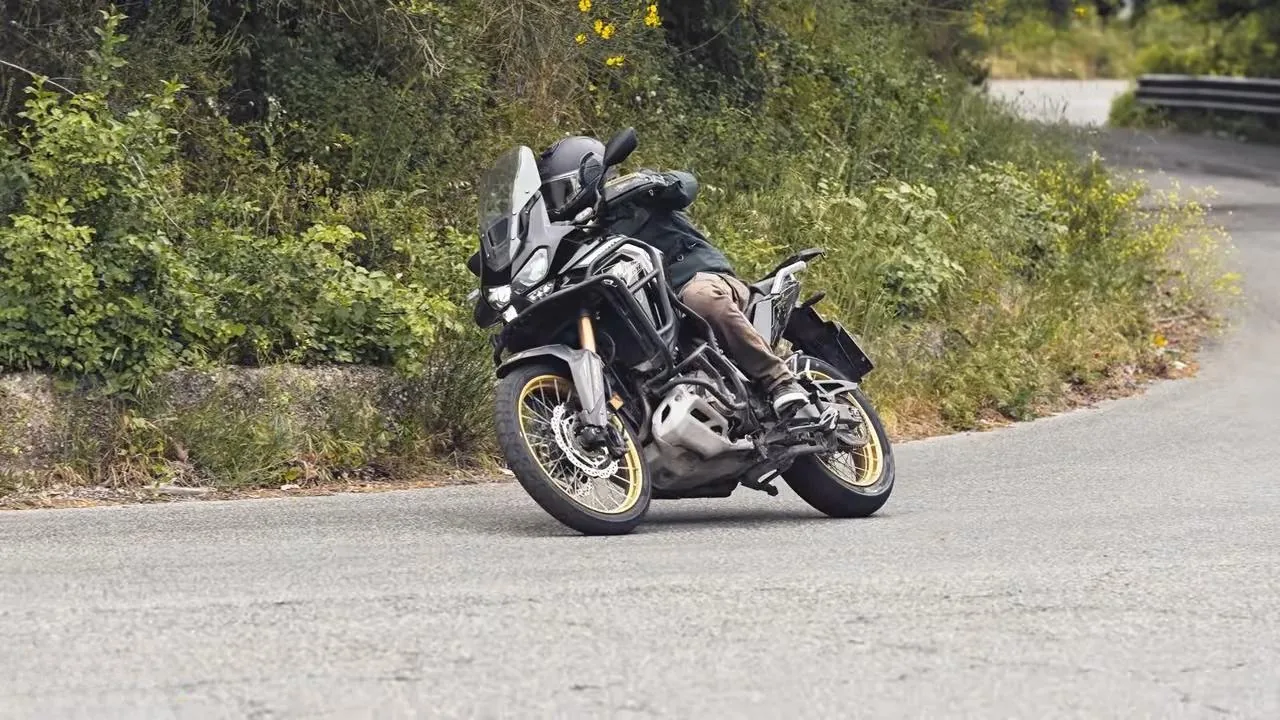
The publication InMoto tested the Trailhound STR on a Honda Africa Twin 1100 Adventure Sports at the Vallelunga proving ground and the roads around it. The riding was mainly on paved roads with a few light off-road sections. The same test also covers the Trailhound Wild.
Why this setup is worth something
Comparing two tyres by reading two separate reviews is close to meaningless. Different bike, different road, different day, different rider, different air temperature — nobody can say which of those produced the difference.
Here the situation is different: same motorcycle, same route, same publication. This is not a laboratory measurement and should not be presented as one; but it is a setup that removes the largest confounders.

Where the two differ — the claimed side
The distinction below is not a test result but the usage balance stated by the manufacturer:
- Trailhound STR — 90% road / 10% off-road
- Trailhound Wild — 70% road / 30% off-road
In practice you see this in the tread: the STR's pattern is closer to a road tyre, while the gaps between the Wild's blocks are wider. Those same gaps provide grip on loose ground and reduce contact area on asphalt. The Wild's side of the same test is covered in our article Trailhound Wild tested on an Africa Twin 1100.
What the test looked at
- Steering precision
- Front-end feedback — whether the rider can feel what the front tyre is doing
- Cornering stability and deformation under load
- Overall dynamic behaviour on the road
The STR's own specification
- Radial structure with a 0° steel belt
- Quadrazone multicompound — on selected rear sizes only, not on the front tyre
- High silica compound — for cold and wet roads
- Adaptive tread design plus profile and casing optimisation
Which one is for you
We can answer that from the stated balance above rather than from the test's verdict: if your unpaved riding amounts to gravel detours between long stretches of asphalt, the 90/10 is built for exactly that. If dirt sections are a planned part of the trip, look at the 70/30.
If you do not know your size, our tyre finder will narrow it down.
Read the verdict at the source
The test is not ours and we do not summarise its conclusion here. InMoto's article and video belong to them; the source link is in our Evidence Centre.